Identify the glass before testing removal
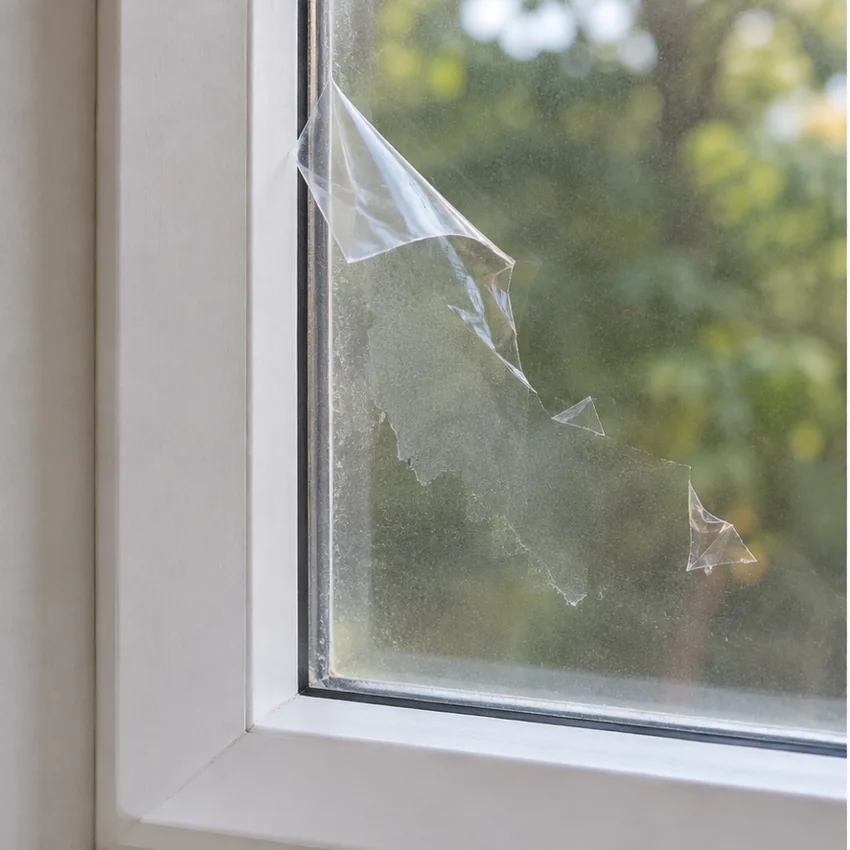
Old architectural film may lift in strips, tear into flakes or leave a layer of adhesive. Those are different jobs. This guide covers windows and doors in buildings, not vehicle glass.
Use the job file, glazing records or glass supplier to identify any exposed coating, decorative surface or heat-treated glass. Note scratches, chips and cracks. If the pane is cracked or loose, keep clear and bring in a glazier. Don’t use a blade to find out what the glass is. The National Glass Association advises against blades on coated glass and treats them as a last resort on heat-treated glass. A film guide mentioning a scraper does not establish that your glass can take one.
Test the film and the adhesive separately
Once you know the surface and have a compatible method, agree on a small test area on an intact, representative pane. Check whether the film peels in sheets or breaks into flakes, how much adhesive remains, and how the glass looks after cleanup. Review any cleaner or tool against the glass, coating, frame and seal instructions. Don’t jump to a stronger solvent, steam or a heat gun if the film will not lift.
One easy window may not represent an entire building. Look at differences in exposure, film age, accessibility and glass type. Track the removal, adhesive clean-up and access work separately. If a scratch or other flaw becomes visible as you go, document it rather than promising the stripped glass will look new.
When security film is attached to the frame
Some security installations use a separate attachment to connect the film to the frame. An apparent bead at the edge is a clue, not proof. Look up the product, installation details and intended protection. Do not cut the suspected attachment to identify it. Bring in an installer trained on that system.
For example, in a 3M attached assembly, replacing scratched film may require replacing both the film and the specified attachment adhesive. If the building relies on that protection, plan what happens during the work and how the specified assembly will be restored. Replacing just the visible film is not an equivalent repair.
What to write down before scheduling
- The glass and exposed surface, or who will confirm them.
- The test result for film, adhesive and the finished surface.
- Access requirements, existing damage and any suspected attachment.
- The approved method, any exclusions and what the building needs after removal.
Sources & scope
Use the linked originals for current provider requirements. These links do not imply affiliation, endorsement or project approval.
- Proper procedures for cleaning architectural glassCautions around coated and heat-treated glass.Source checked . This is our check date, not a publication date.
- Interior architectural film bulletin, including removalManufacturer-specific guidance for film and residue.Source checked . This is our check date, not a publication date.
- Impact Protection Attachment installation bulletinExample of the difference between film and a frame attachment.Source checked . This is our check date, not a publication date.
- Safety and security window film replacement guidanceNotes on replacing film in a specified attached system.Source checked . This is our check date, not a publication date.
- Flat-glass film and attachment warranty exampleProduct-specific claim terms and professional removal guidance.Source checked . This is our check date, not a publication date.